
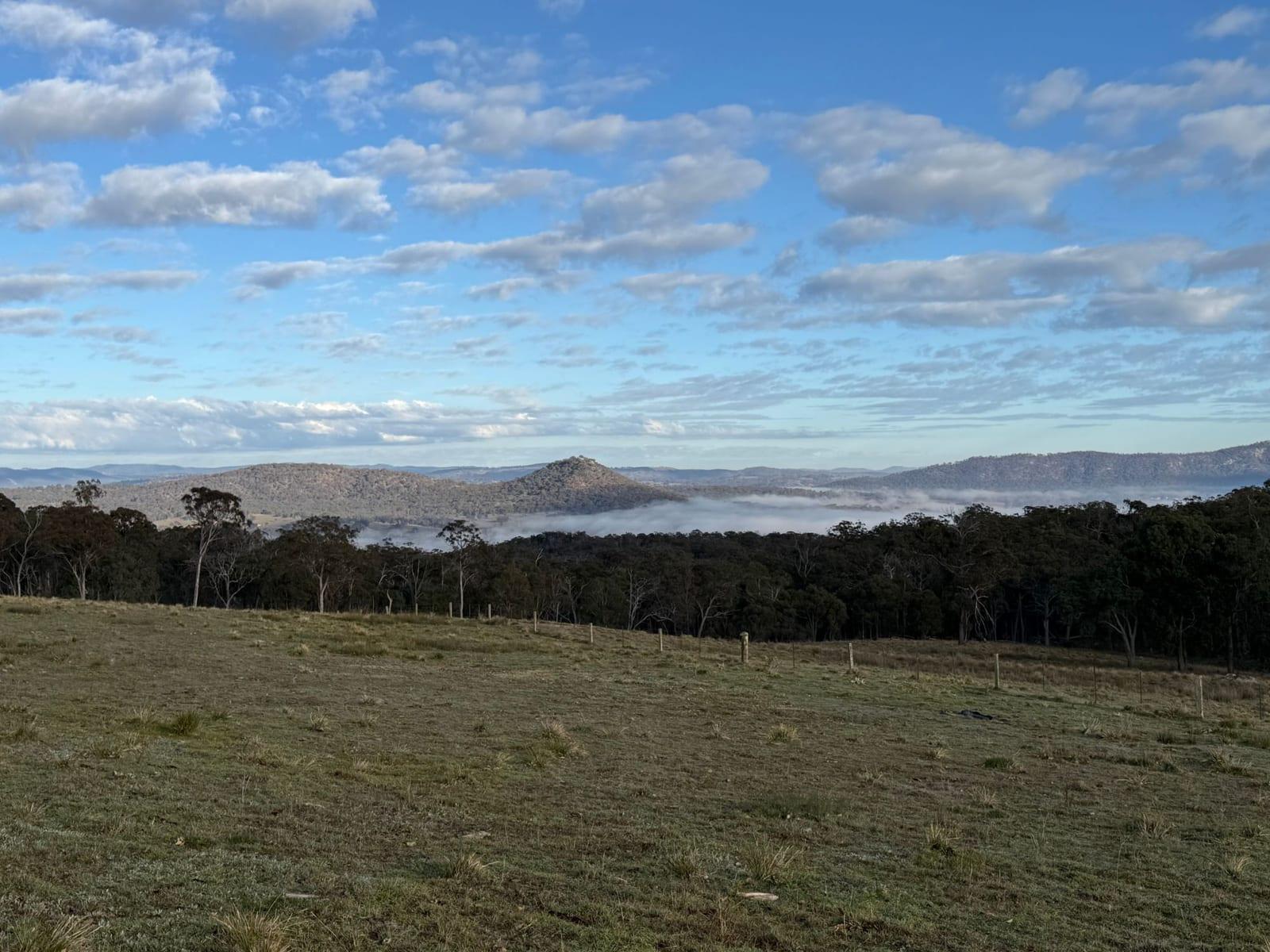
A pastoral history
Five Mile
Before settlement
Long before settlement and before there was a fence on it, this was country people gathered on. Bora rings, ceremonial circles used for initiation, have been recorded at Sandy Flat, with marked trees nearby. The granite ridges and creeks between Tenterfield and Bolivia were home and a meeting place for generations beyond counting.
1840
The first Europeans came with sheep. In 1840 a squatter named Edward Hurry took up a vast run between Deepwater and Tenterfield and called it Bolivia, after the South American country where he had once lived. The following year the census counted nineteen people on the station, ten of them convicts. Hurry’s name stayed on the land. A parish map drawn in 1905 still marked a rise as Hurry’s Hill. For much of the nineteenth century, the land later known as Emaho lay in the back country of Bolivia Station, a long ride from the homestead. Those years were not gentle. The frontier here was violent, and Bluff Rock, the great granite face on the highway, still carries the memory of what happened to Aboriginal people there in 1844.
1886
Then came the railway. The line reached Sandy Flat on 1 September 1886, crossing the Bluff River on a timber truss bridge just north of what is now the Cottesbrook Road crossing. A school opened, a post office followed the next winter, a hotel served the men building the line and a village grew around the platform. In the years that followed, parts of Bolivia’s outer country were opened for selection.
1892
In April 1892 William Petrie applied for a block of granite and stringybark on Five Mile Creek, a few miles from the platform. That August a surveyor walked his boundaries, blazing corner trees and noting peppermint, apple and box, a track in from Sandy Flat and another out to Hawkins’ sawmill. William’s wife Bridget was Tenterfield-born. Together they raised ten children, seven sons and three daughters. For fifteen years William kept adding country, block by block.
1904
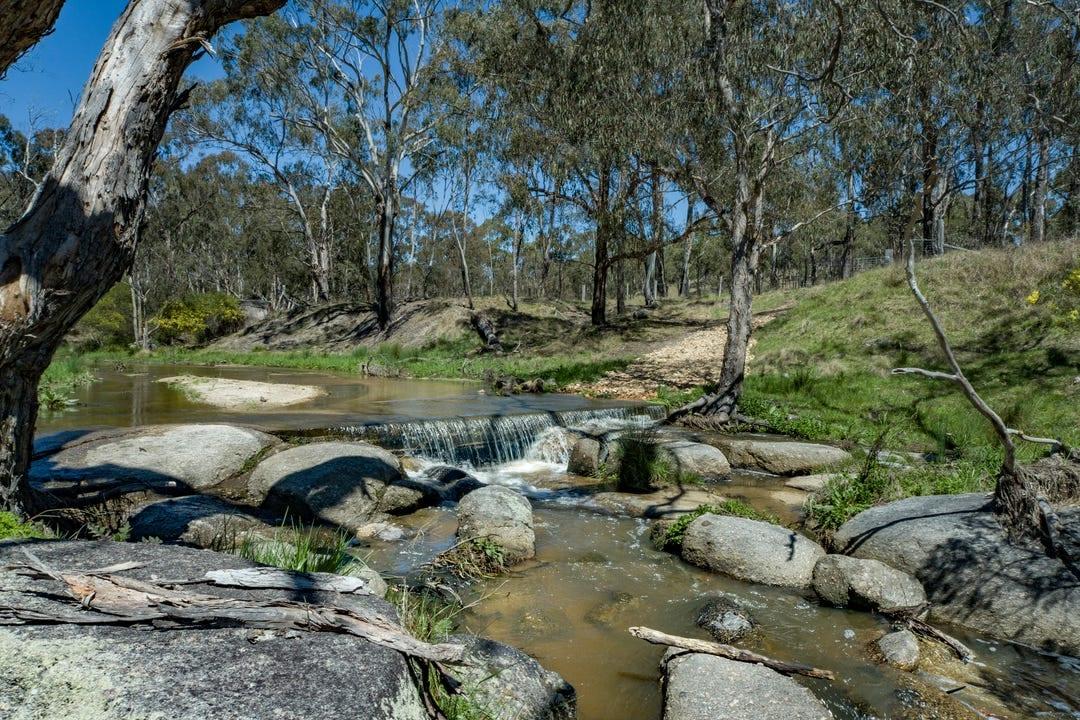
It was never easy land. In 1904 William stood before the Land Court to argue that his rent was too high. After hearing the evidence, the board cut it to a penny an acre. That same year he registered his stock brand, PE over 3, and gave his address as “Five-mile, Bolivia”. It is the earliest address we have for William’s holding. An old well on the property, believed to date from those years, is still its main source of water today.
Over the boundary
Over the boundary lived James Dwyer, a Tipperary man who had landed at Grafton in 1854, worked on a station for seven pounds a year and tried his luck on the Timbarra goldfield. He selected at Sandy Flat in 1879 and lived to within a month of his ninety-third birthday. Patrick Joseph Dwyer took up the creek flats in 1899, and Henry William Perrin the ridges in 1905. The family names turn up together in the old Tenterfield papers, in the football side, at dances in the Sandy Flat hall and on the roll of the rifle club, which formed in 1910 with forty members.
1916
In March 1916, eighteen-year-old Frederick Petrie enlisted in the Australian Imperial Force. He gave his occupation as farmer and his address as Hedley’s Swamp, Tenterfield. For his next of kin he named his father, W. Petrie of Sandy Flat.
1925
In 1925 William Hartmann and his brother Rol came north from Dundee, near Glen Innes, to take up country at Cottesbrook next door. William built a merino stud there, and through the 1930s his sheep won at shows from Stanthorpe to Glen Innes. Over time the family gathered in the old Petrie, Dwyer and Perrin blocks. The names of William’s wife Annie and their daughters Mollie and Carmel stayed on the titles into the 1960s.
2012
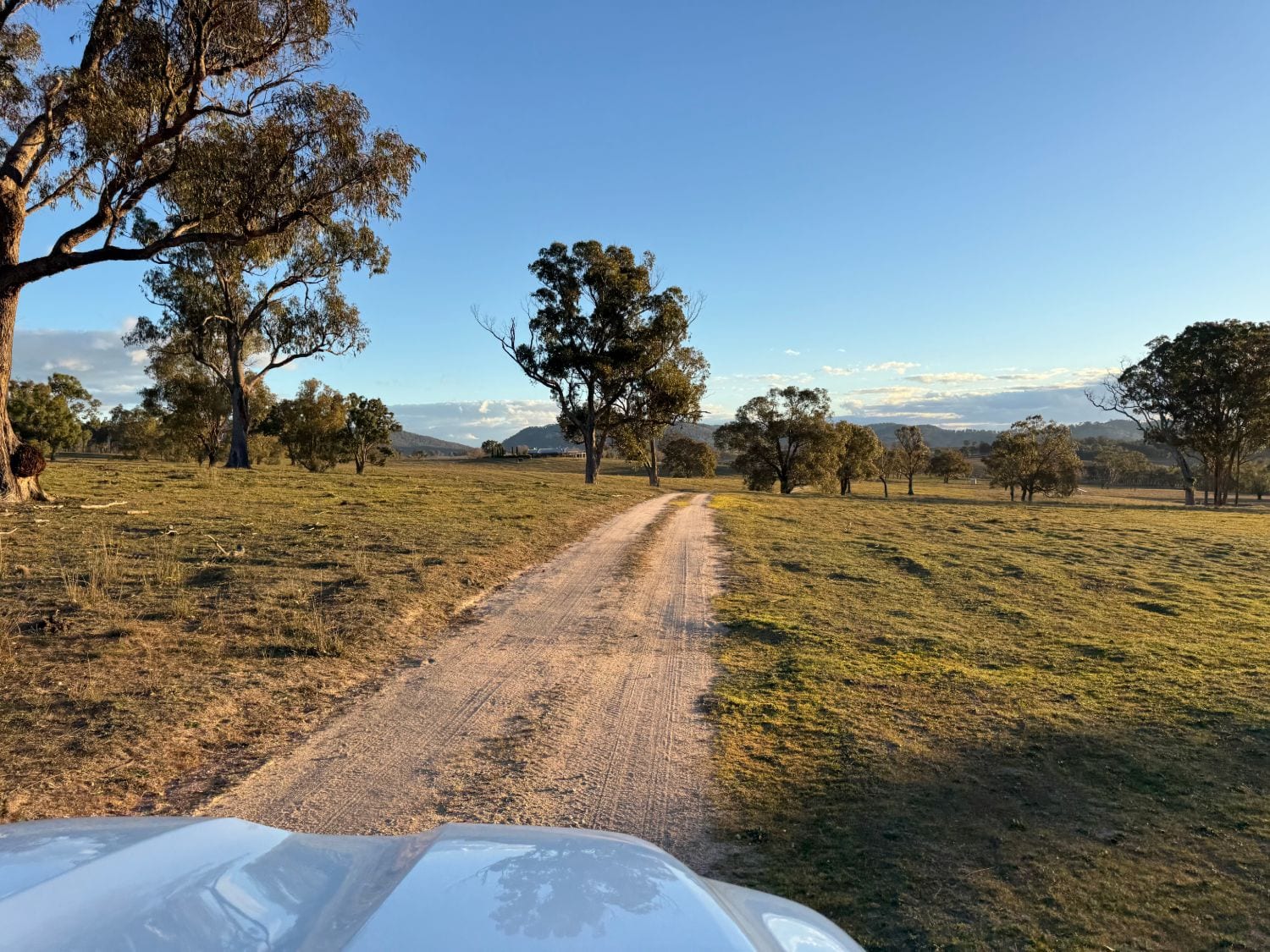
By 2012 and the Christophersen years, two grazing properties, Emaho and Myra, were brought together. Between them they covered just over 4,000 acres. The family developed an Angus herd whose weaners topped the Tenterfield sales. By the time the family offered the property for sale in 2022, the herd had been there for nearly twenty years. The Christophersens gave the place the name Emaho, a Tibetan Buddhist expression of wonder.
2027
In 2027 the Northcott family bought the property and restored its original name, Five Mile. It was the name William Petrie gave as his address in 1904. More than a century later, the Northcott boys will grow up knowing Five Mile by its creek, its granite ridges and the time their family spends here together.
Get in touch
Let's talk about country, cattle and the work ahead.
For property, livestock and business enquiries, contact the Brampton Agriculture team.
Contact Brampton