Reading a paddock: what pasture condition tells you before you count the feed
A feed budget tells you how many days a paddock will carry a mob. Pasture condition tells you whether it will still be a paddock worth having in three years. The second question should be asked first.
- Author
- By Brampton Agriculture
- Published
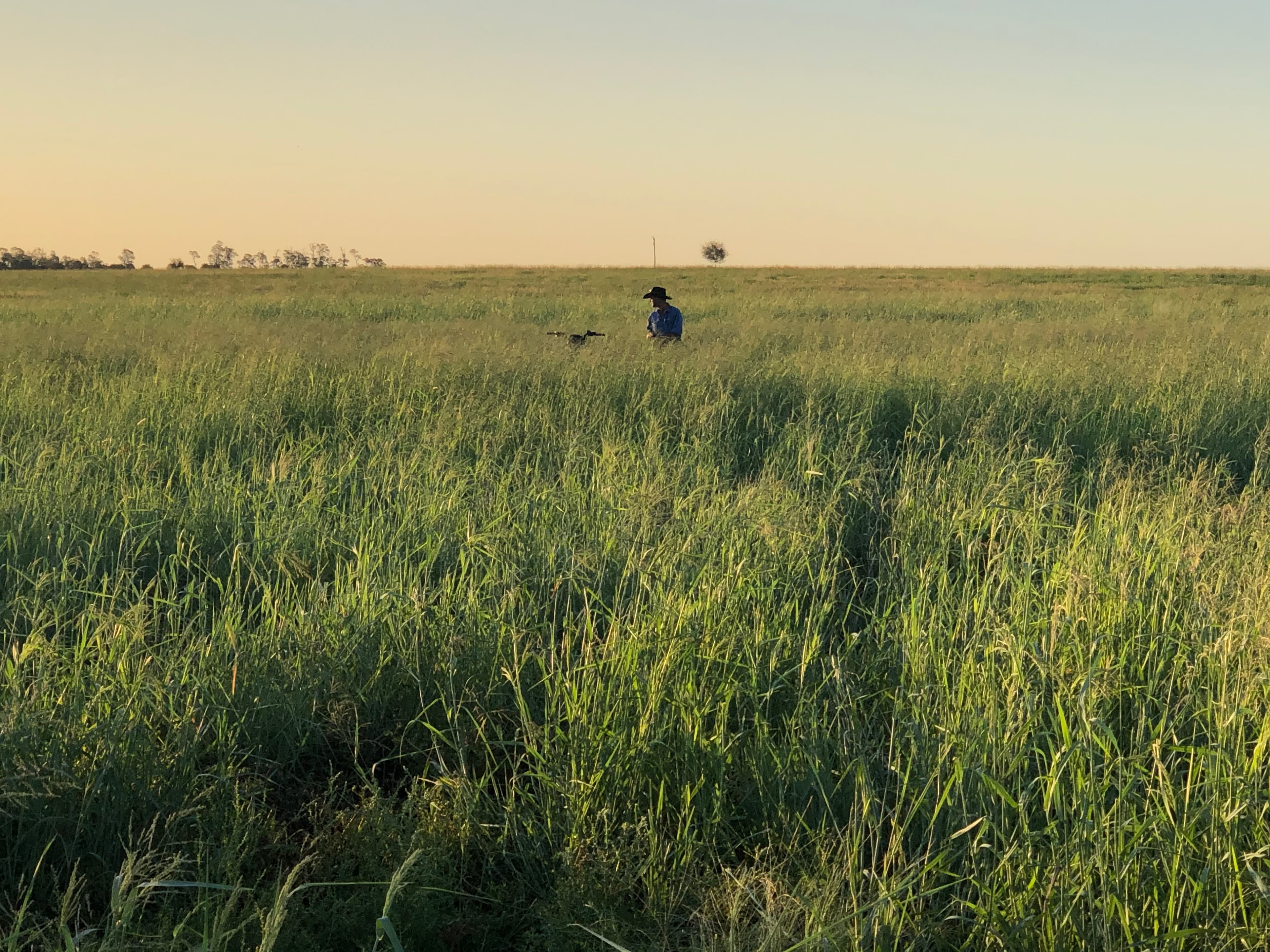
Most grazing decisions start with a number: kilograms of dry matter per hectare, days of feed, head per paddock. Those numbers are useful, and a later article in this series deals with feed budgeting in detail. But a number describes a moment. A paddock is a system with a direction, and the direction is visible to anyone who walks it with the right questions in mind. Reading pasture condition is the skill of seeing where a paddock is heading, not just what it holds today.
Composition before quantity
The first thing to look at is what the feed is made of. Two paddocks can carry the same bulk of dry matter and be in completely different states. One is dominated by perennial grasses that respond to rain, hold the soil and persist through a dry run. The other is carrying annuals and weeds that flush after rain, set seed and leave bare ground behind them. The bulk looks the same in a good season. The difference shows up in the bad one.
Walk a line across the paddock and note, at regular intervals, what is under your boot. Is it a desirable perennial, an annual, a weed, bare soil or litter? Doing this at the same points each season turns an impression into a record. The trend in the share of perennials is one of the most honest indicators of whether management is building the pasture or mining it.
Density, vigour and the gaps between plants
Composition tells you what is there. Density tells you how much of the soil is occupied by plants that matter. Vigorous perennials have crowns that are expanding, tillers at the base and green growth after rain. Plants under too much grazing pressure have small crowns, few tillers and a long recovery after each bite. Look at the base of the plants, not the top. The top is what cattle have left; the base is what the plant has kept for itself.
The gaps matter as much as the plants. Bare patches between tussocks are where water runs rather than soaks, where weeds establish and where the next dry season takes soil. A pasture with the same species list but closing gaps is improving. One with widening gaps is declining, regardless of what the feed budget says this month.
Groundcover and litter
Litter, the layer of dead material on the surface, is often ignored because cattle cannot eat it. It is doing the quiet work of protecting the soil, feeding soil organisms and holding moisture for the next germination. A paddock that is grazed to the point where litter disappears has lost a buffer it will miss in the first dry month.
Groundcover thresholds differ by soil and slope. What matters when reading a paddock is whether cover is holding through the dry end of the year, and whether the places it fails are the places that erode. Those spots, the ridgelines, the stock camps and the tracks to water, are usually where the first sign of a problem appears.
Signs of the grazing history
A paddock records how it has been grazed. Heavily grazed perennials show a flat, cropped profile with few seed heads. Patches of rank, ungrazed growth beside bare, overgrazed areas point to uneven grazing, usually driven by water placement, shade or paddock shape. Cattle tracks worn to bare earth show where the pressure concentrates.
These patterns matter because the answer to them is rarely more or fewer cattle. It is often a change in where water is, how long cattle stay and when they come back. A paddock that reads as overgrazed near the trough and under-used at the far end is telling you about infrastructure, not stocking rate.
Soil at the surface
A pasture is only as good as the soil under it, and some of that soil can be read from the top. A crusted, sealed surface sheds water. A surface with cracks, worm casts and a crumbly structure under the litter is taking water in. Pugging and compaction from stock on wet ground show up as a hard, platy layer and a pasture that struggles to recover. Push a knife or a wire into the ground and feel the resistance. It is a crude test, but a consistent one.
Turning observation into a record
The value of reading paddocks comes from doing it the same way over time. A fixed set of points, photographed and described in the same season each year, is more useful than a detailed assessment done once. The record lets you separate a bad season from a declining paddock, which is the distinction that drives the right response.
A simple field sheet covering composition, density, cover, litter, grazing pattern and surface condition, scored on a consistent scale, is enough. The discipline is in repeating it.
How this fits Brampton's approach
At Brampton, pasture condition is the first thing we want to understand about a property, before production figures or stocking rates. A paddock that is improving under current management is an asset. One that is declining tells us where infrastructure, grazing timing or stocking decisions need to change. Our approach to assessing country before changing it is set out on Land and grazing, and the way we intend to record and assess those changes on Research and learning.
Related reading
- Groundcover: the first thing to protect when the season turns dry
- Land improvement and grazing management
Sources
- Meat & Livestock Australia, More Beef from Pastures: Pasture growth
- Meat & Livestock Australia, More Beef from Pastures: Pasture utilisation
- CSIRO, Soil research
This is an explanatory article about assessing pasture. Species, thresholds and scoring scales should be set for the specific region and land types involved.