Joining: setting the breeding season up for a tight calving
A compact calving is the result of decisions made months before the bulls go in. Cow condition, bull preparation and the length of joining decide how much of the herd calves early, and how much of next year's work is already done.
- Author
- By Brampton Agriculture
- Published
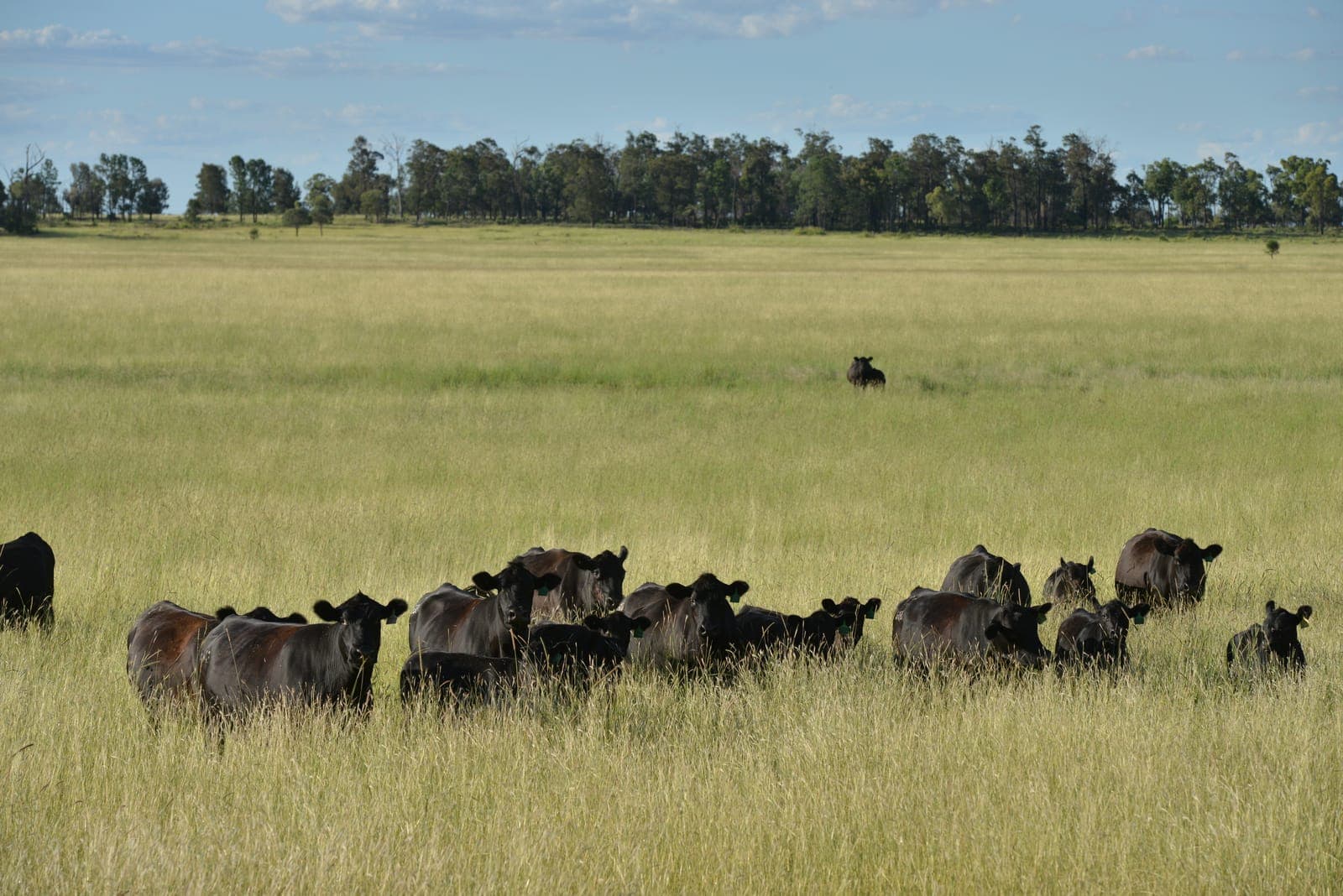
Joining is the point in the cattle year where the breeding herd's performance is largely decided. Once the bulls go out, the pattern of next year's calving is set: how many cows conceive in the first cycle, how many at all, and how spread out the calves will be. Everything that follows, from weaning weights to the ease of managing a mob of similar-aged calves, is shaped by how joining was prepared.
Why a tight calving matters
A calving spread over many weeks produces a mob of calves at different ages and weights. They wean unevenly, reach market specification at different times and complicate every health and handling job in between. A tight calving, with most cows calving in the first few weeks, produces a more uniform mob and gives the cows more time to recover before the next joining.
There is a compounding effect. A cow that calves early has longer to return to cycling before the bulls go in again, so she is more likely to conceive early next year. A cow that calves late is racing the calendar, and the late calvers tend to stay late or drop out altogether. The breeding season is a cycle that rewards early conception year after year.
Cow condition is the lever
The single largest influence on whether a cow conceives early is her body condition at joining and the direction it is moving. A cow in moderate condition and gaining weight cycles readily. A cow in poor condition, or one losing weight while feeding a calf, may not cycle at all until condition improves, by which point the joining window may have passed.
That makes nutrition in the weeks before and during joining a breeding decision, not just a feeding one. On pasture-based systems it means planning joining to coincide with a period of reliable feed, or supplementing to hold condition when the season does not cooperate. Condition scoring the breeders before joining, and acting on what the scores show, is the practical version of this.
First-calf heifers deserve separate attention. They are still growing while feeding their first calf, and they are the group most likely to fail to rejoin on time. Many producers join heifers ahead of the main herd, or manage them as a separate mob with better feed, for exactly this reason.
Bulls: fertile, sound and enough of them
A bull that is not working, or working poorly, can cost a large part of a season before anyone notices. Bull soundness checks before joining, covering structure, testicular development, semen quality and serving ability, are the insurance against that. A bull can look the part and still be sub-fertile.
The number of bulls needs to reflect the paddock, the terrain and the number of cows. Large paddocks, rough country and single-sire mobs all raise the risk that a problem with one bull goes undetected. Multiple-sire joining spreads that risk, at the cost of knowing which bull sired which calf, a trade-off that depends on whether individual sire records matter to the business.
The length of joining
A short joining period is the most direct way to enforce a tight calving: cows that do not conceive within the window are identified at pregnancy testing and can be managed or sold. The risk is a lower overall conception rate if cows are not cycling when the bulls go in. The right length depends on how well the herd is set up to conceive early, which brings the decision back to condition and nutrition.
Many herds move towards a shorter joining gradually, tightening the window each year as the proportion of early-calving cows increases. Cutting the joining period sharply in one year, on a herd that is not in condition to respond, usually produces a poor result and an argument for going back to the old way.
Health and the timing of other jobs
Vaccinations, parasite treatments and trace element programs should be planned around joining rather than clashing with it. Handling and treatment during the joining period adds stress at the wrong time. Reproductive diseases that reduce conception or cause abortion are a specific risk, and a herd health plan with a veterinarian should address them before the bulls go out.
Records that make next year easier
Joining is only as useful as the record of it. The dates bulls went in and came out, which bulls were with which cows, and the condition scores at the start all become essential when pregnancy test results arrive. Without them, a disappointing result cannot be traced to its cause, and the same mistake is easy to repeat.
How this fits Brampton's approach
Our cattle approach treats breeding as a system where the animal, the feed the country can supply and the intended market are considered together. Joining is where that system is set in motion each year, and the decisions here are judged by whether they produce cattle that perform within what the property can sustain. The principles are set out on Cattle and Wagyu.
Related reading
Sources
- Meat & Livestock Australia, More Beef from Pastures: Weaner throughput
- Meat & Livestock Australia, More Beef from Pastures: Herd health and welfare
- FutureBeef, Body condition scoring
This is an explanatory article about breeding management. Joining dates, bull ratios and health programs should be set with a veterinarian and adviser for the specific herd and property.