Weaning and backgrounding: setting young cattle up for the next stage
The weeks after weaning decide a lot about how a young animal grows. A calm weaning and a clear plan for the backgrounding phase make the next stage easier for the cattle and the business.
- Author
- By Brampton Agriculture
- Published
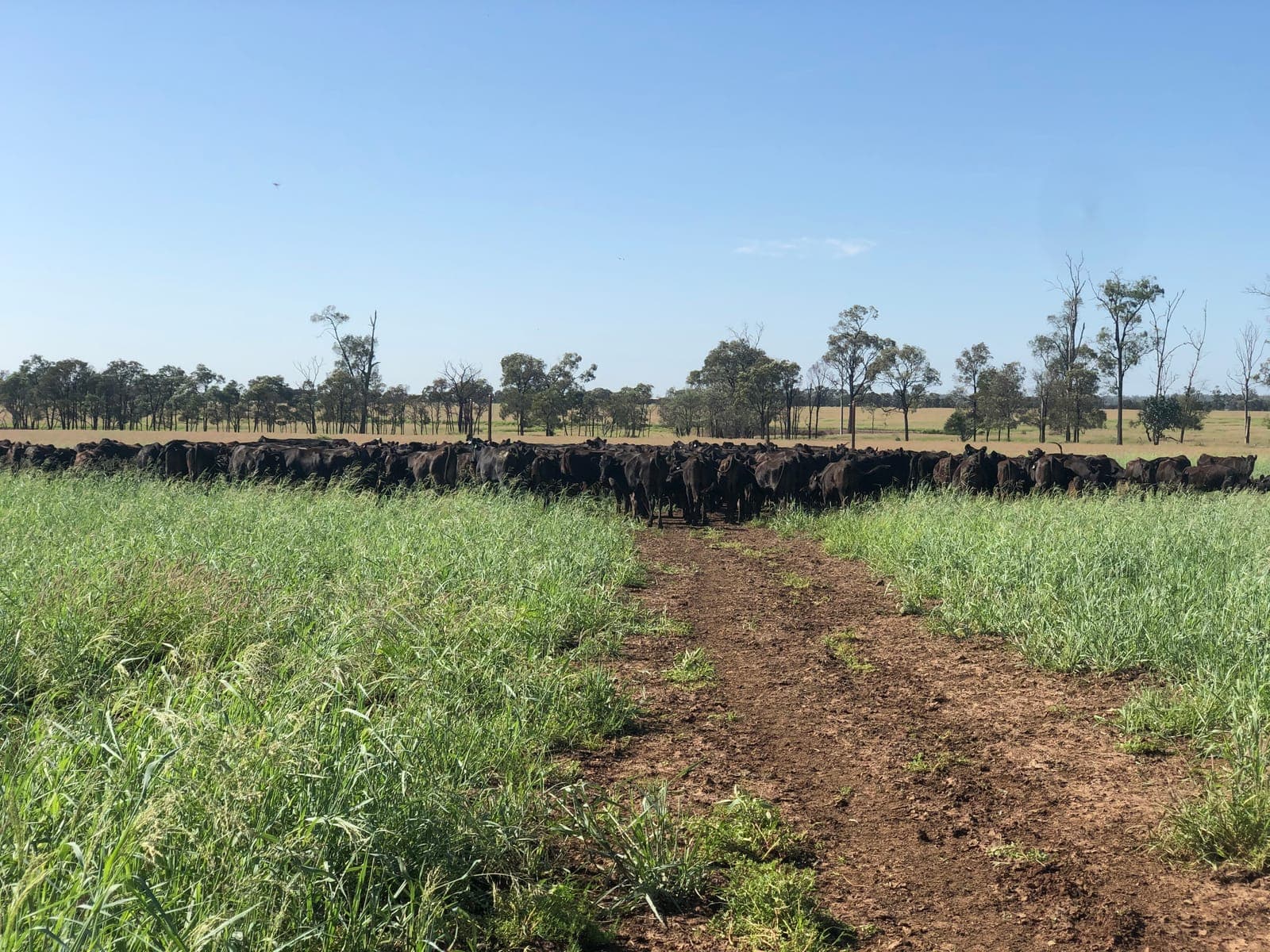
Weaning is a stress point for a calf and a decision point for a producer. The calf loses its mother, its milk and the social structure it has known since birth, in a single day. The producer gains a mob of young cattle whose growth over the next months will determine their value and their options. How weaning is managed, and what happens in the growing phase that follows, shapes animal health, growth and the choices available when the cattle are eventually sold or moved on to the next stage. It is one of the few points in the cattle year where a day's management has consequences that last a year.
Why weaning matters to the cow as well
Weaning is usually discussed in terms of the calf, but it is also the moment the cow stops lactating and begins recovering condition for the next calving. A cow that is weaned early, before the dry season or before she has lost too much condition, rejoins more reliably than one left to feed a calf through a feed shortage. The timing of weaning is therefore a breeding decision as much as a growth decision, and in a tight season weaning early is one of the most effective ways to protect the breeding herd. The condition scoring and joining articles in this series cover the mechanism.
Weaning with the animal in mind
A calf that is weaned calmly, with feed and water it already knows how to use, settles faster and keeps growing. Yard weaning, where calves are held in yards and handled over several days with good feed and water, is widely used because it teaches cattle to be handled and to eat from troughs or hay before they go back to a paddock. Calves weaned this way are easier to handle for the rest of their lives, settle faster into feedlots and new properties, and lose less weight in the weeks after weaning than calves simply separated and put in a paddock.
The details matter more than the method. Calves need enough trough and water space that the timid ones eat and drink, a quiet routine with people walking through the mob several times a day, shade and shelter in the yards, and attention to any animal that is not eating by the second day. Hay of good quality, or a weaner ration introduced gradually, gives them something they can eat straight away. Keeping the cows out of earshot reduces the bawling and the stress on both sides.
Health treatments are usually timed around weaning. The vaccination program, parasite treatment and any trace element supplementation can be given at weaning or in the yards during the weaning period, which uses the handling to do several jobs at once. The program needs to be planned with a veterinarian rather than improvised, because the timing of boosters and the withholding periods of treatments interact with the sale plans for the cattle.
What backgrounding is for
Backgrounding is the growing stage between weaning and whatever comes next: joining for heifers kept as breeders, feedlot entry, a grass-finishing program, or sale as store cattle. Its purpose is to take a weaner to a target weight and condition within a known period, on feed the property can realistically supply, in a state of health that lets it perform at the next stage.
That makes it a planning exercise before it is a feeding exercise. The questions are the same on any property: what weight do the cattle need to reach, by when, on what feed, and at what cost per kilogram gained? A producer who can answer those four questions has a backgrounding plan. One who cannot is growing cattle and hoping.
Matching growth to the feed on hand
Young cattle grow in proportion to what they eat above maintenance, and their requirement for protein is higher relative to energy than that of mature cattle, because they are building tissue rather than storing fat. Good-quality growing pasture meets the requirement; mature, dry or frosted pasture does not, and weaners on it may stand still for months while looking full. In a good season pasture alone may deliver the target. In a tighter one, the choice is between a longer timeframe, supplementary feed or fewer cattle in the program. Each has a cost, and the right answer depends on the market the cattle are intended for and the price of feed at the time.
A feed budget for the growing mob, checked against actual weights at intervals, shows early whether the plan is on track. Weighing is the honest check. Cattle that look well can still be growing slower than the plan assumes, and a mob weighed monthly reveals a stall within weeks rather than at sale. The weights also identify the tail of the mob, the animals growing well behind the rest, which may be sick, parasitised or simply poor doers, and each needs a different response.
Health in the growing phase
Weaners are the class of cattle most vulnerable to internal parasites, because their immunity is not yet developed, and the growing phase in warm, moist conditions is a high-risk period. Faecal egg counts tell whether a drench is needed; drenching on the calendar wastes product and builds resistance. Respiratory disease, pink eye and other conditions that spread in groups of young cattle need to be recognised early, which means someone looking at the mob regularly with the knowledge to see a problem. The booster vaccinations that follow the weaning shots are the step most often missed, and missing them leaves protection incomplete.
Water and shade are health matters too. Weaners are less experienced at finding water, more vulnerable to heat, and more affected by poor water quality than older cattle. A paddock chosen for its feed but poor in water or shade will show the cost in the weaner mob first.
Specifications set the target
The buyer or the next production stage usually sets the specification: a weight range, an age, a condition score, sometimes a breed or program requirement. A feedlot wants cattle at an entry weight and age that suit its program. A grass-finishing program wants cattle that will reach carcase specification on the feed available. A breeder wants heifers at a joining weight that gives them the best chance of conceiving. Knowing that specification before weaning allows the backgrounding plan to work backwards from it, rather than discovering at sale time that the cattle are lighter or heavier than the market wants. The marketing article in this series covers the specification in detail.
Handling and the lessons that stick
Young cattle learn how to be handled, and the lessons stick. Yard weaning gives them an early experience of people, yards and feed troughs that makes every later handling easier. Continuing that through the growing phase, with calm handling at each weighing and treatment, produces cattle that are safer to work and less stressed by it. Stress itself costs growth, and cattle that are frightened of people grow slower, bruise more at sale and are harder to manage at every stage that follows.
Records
Every weaner should leave the yards with an identification, a recorded weaning weight, and a record of the treatments given. Those records are the start of the animal's history. Weights at intervals through backgrounding, treatment dates and withholding periods, and the final weight at sale or transfer complete it. The records serve the traceability declarations the sale will require, and they tell the business, over years, which cattle grew best on its country and which did not.
How this fits Brampton's approach
Our cattle approach starts with the relationship between the animal, the feed the country can supply and the market the cattle are intended for. Weaning and backgrounding are where that relationship is first put to the test, and we manage them as a planned program with targets, weights and a health plan rather than as a period of waiting. The principles we apply are described on Cattle and Wagyu, and the grazing management that supports them on Land and grazing.
Related reading
Sources
- Meat & Livestock Australia, More Beef from Pastures: Weaner throughput
- FutureBeef, Yard weaning
- Meat & Livestock Australia, More Beef from Pastures: Meeting market specifications
- Meat & Livestock Australia, Animal health, welfare and biosecurity research
This is an explanatory article about a production stage. Health programs, weaning methods and growth targets should be set with a veterinarian and adviser for the specific cattle and property.